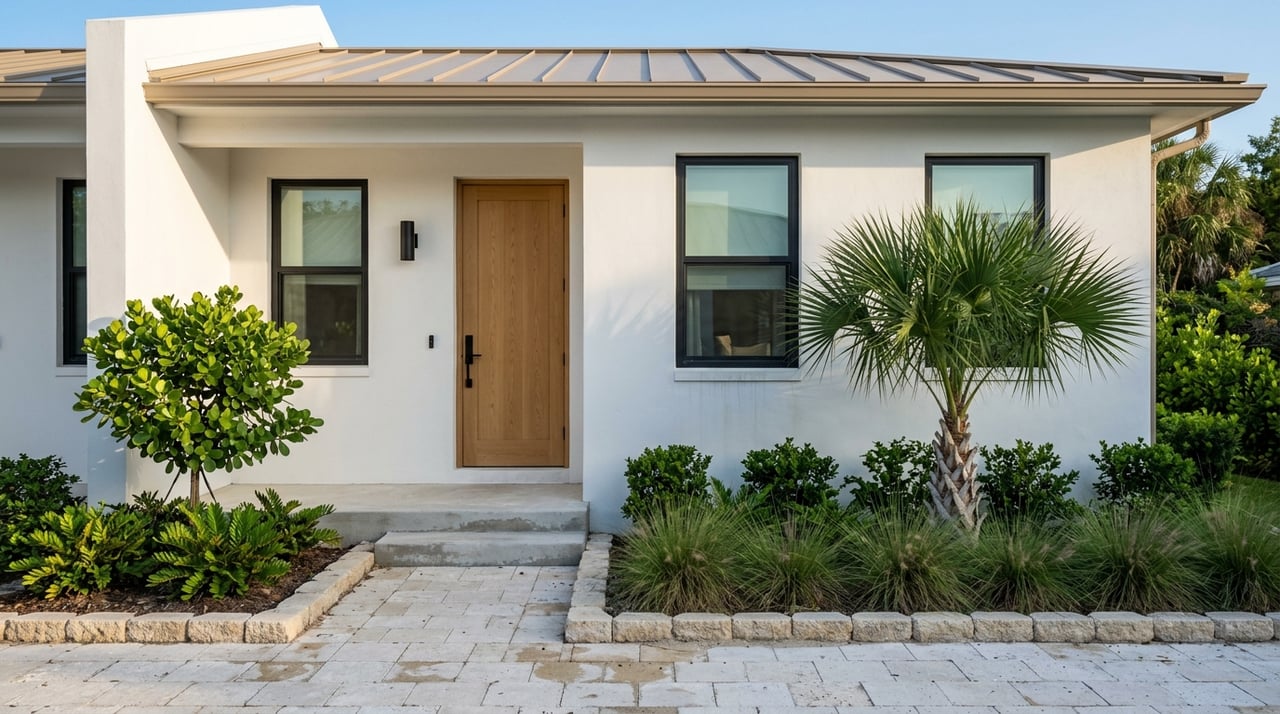
Townhome Or Single-Family In Dunedin? How To Choose Your Fit
Wondering whether a townhome or a single-family home makes more sense in Dunedin? It is a smart question, especially in a market where lifestyle, monthly costs, and storm planning can shape your experience as much as the price tag. If you want to be close to downtown, understand your real ownership costs, and buy with fewer surprises, this guide will help you sort through the tradeoffs. Let’s dive in.
Dunedin is not a one-size-fits-all market. The city is known for a walkable downtown, trail access, and streets and crossings that support golf-cart use, which can make lower-maintenance attached living especially appealing if you want convenience and a lock-and-leave lifestyle.
At the same time, Pinellas County says everyone in the county is in a flood zone, and flood zones, evacuation zones, and storm surge maps are not the same thing. That means your decision is not just about layout or curb appeal. It is also about insurance, upkeep, and how much control you want over the property.
Recent market snapshots point to an active Dunedin market. Depending on the source and method, typical values and pricing land around the upper $300,000s to low $400,000s, with homes often going pending in roughly 42 to 49 days. In that kind of market, your best fit often comes down to monthly carrying cost and ownership structure, not just entry price.
A single-family home usually gives you the most direct control over the house and site. You are more likely to manage your own exterior upkeep, repairs, and property decisions, which can be a plus if you value flexibility.
A townhome can offer a more streamlined day-to-day lifestyle, but the details depend on how the community is legally structured. In Florida, some attached homes fall under homeowners’ association rules and others under condominium rules, and those structures can affect maintenance responsibilities, insurance, assessments, and how decisions get made.
That is why the word townhome does not tell you enough by itself. Before you assume what is included, you need to verify the declaration, bylaws, budget, and insurance setup for that specific property.
Florida law treats homeowners’ associations and condominiums as different legal structures. Chapter 720 governs homeowners’ associations, while Chapter 718 governs condominiums.
For you as a buyer, that matters because both structures can involve assessments, fees, and enforcement powers. Associations may collect assessments, and unpaid amounts can become liens. In a condo structure, common expenses are also funded by assessments, and unit owners are responsible for their share.
Some townhome communities include exterior maintenance, roof responsibilities, or common-area care in the monthly fee. Others may leave more responsibility with the owner than you expect.
Single-family homes usually involve fewer shared-governance layers, but that also means you are directly responsible for more of the site and structure. If you prefer fewer rules and more control, that may be worth the extra upkeep.
A lower purchase price does not always mean a lower monthly cost. If a townhome has meaningful association fees, possible special assessments, or added insurance needs, your total monthly outlay may end up closer to a single-family home than you expected.
This is where a practical review matters. You want to know what the fee covers, whether there are any planned or recent special assessments, and whether there is any loss-assessment exposure to budget for.
In Dunedin, this topic deserves real attention. Pinellas County says high-risk flood zones are mapped on FEMA flood maps, and homes in high-risk zones with federally backed mortgages must carry flood insurance.
Just as important, flood zones and evacuation zones are not the same thing. A property can have one type of exposure without matching the other, so you should look at both when comparing homes.
Florida’s insurance guidance says standard homeowners policies cover certain covered perils such as hurricanes and fire. For condo unit owners, an HO-6 policy generally focuses on personal property and liability instead.
Florida also says condo unit-owner policies must include at least $2,000 in loss-assessment coverage with no more than a $250 deductible. That is a useful reminder that attached ownership can come with insurance layers that work differently from a detached home.
Florida requires hurricane deductible options to be offered at $500, 2%, 5%, or 10% of dwelling limits. When you compare a townhome and a single-family home, do not stop at the premium.
Look closely at the deductible and what the policy actually covers. Two homes with similar asking prices can feel very different when a storm claim happens.
Most homeowners insurance does not cover flood damage, and flood insurance is generally a separate policy. This is one of the biggest reasons your monthly carrying cost can look different from your first estimate.
There is some good news locally. Dunedin says it participates in FEMA’s Community Rating System as a Class 5 community, which the city says provides a 25% flood-insurance premium reduction for policyholders in the city.
If you are considering an older single-family home, a storm-affected property, or a home that may need major work, Dunedin’s floodplain rules should be part of your decision early. The city’s floodplain review guidance says remodels, additions, and repairs may be affected by local rules.
It also notes that substantial damage or substantial improvement can trigger elevation requirements and permits. In plain terms, a house that seems like a great renovation opportunity may come with a more complex path than you expected.
This does not automatically make a single-family home the wrong choice. It just means that if you want a project, you should evaluate renovation feasibility, permit history, and floodplain implications before you commit.
For many buyers, property taxes are more about occupancy than property type. Pinellas County says a homestead exemption can apply to your primary residence.
After one year of homestead status, qualifying owners may also receive the Save Our Homes cap, which limits assessed value growth to 3% per year or inflation, whichever is less. So if either home will be your permanent residence, a townhome and a single-family home can receive similar tax treatment.
A townhome may be a strong match if you want to stay close to downtown Dunedin, enjoy a more lock-and-leave setup, and prefer less hands-on maintenance. That can be especially appealing if walkability, trail access, and easy everyday living are high on your list.
You may also like a townhome if you are comfortable with association rules and shared costs, and you value a more structured ownership setup.
A single-family home may be the better fit if you want the most direct say over the site, fewer shared-governance layers, and more flexibility around how you maintain and use the property. That can matter a lot if yard space, storage, privacy, or future improvement plans are important to you.
It may also be a better fit if you would rather handle upkeep directly than rely on an association process.
Before you choose, work through these five questions:
What do you want your monthly payment to feel like?
Include mortgage, taxes, insurance, flood insurance, and any association fees.
How much maintenance do you want to manage yourself?
Be honest about whether you want convenience or control.
What legal structure governs the property?
Confirm whether it falls under an HOA or condo structure, and read the governing documents.
What is the real storm and flood picture?
Check flood zone, evacuation zone, and likely insurance costs for that specific property.
Do you want a move-in-ready home or a future project?
If renovations are part of the plan, review permit history and floodplain rules early.
In Dunedin, the better choice is not always the one with the lower list price. A townhome can deliver the lifestyle and convenience you want, but fees, rules, and insurance details need careful review.
A single-family home can offer freedom and flexibility, but upkeep, flood exposure, and renovation limits can change the long-term picture. The smartest move is to compare properties based on total cost, ownership structure, and future flexibility, not just what gets you in the door.
If you want help comparing townhomes and single-family homes in Dunedin with a clear eye on monthly cost, flood considerations, and long-term fit, Melissa Hoglund can help you evaluate the options and make a confident move.
Explore more timely articles covering buying, selling, and investing in today’s market. Melissa’s background brings a data-driven, professional lens to every topic.
July 23, 2026
July 16, 2026
July 9, 2026
July 2, 2026
June 25, 2026
June 18, 2026
June 11, 2026
June 4, 2026
May 28, 2026
Melissa’s approach is steady and informed. She advocates with professionalism. Results follow preparation.
Melissa Hoglund
2933 W Bay Drive Belleair Bluffs, FL 33770